
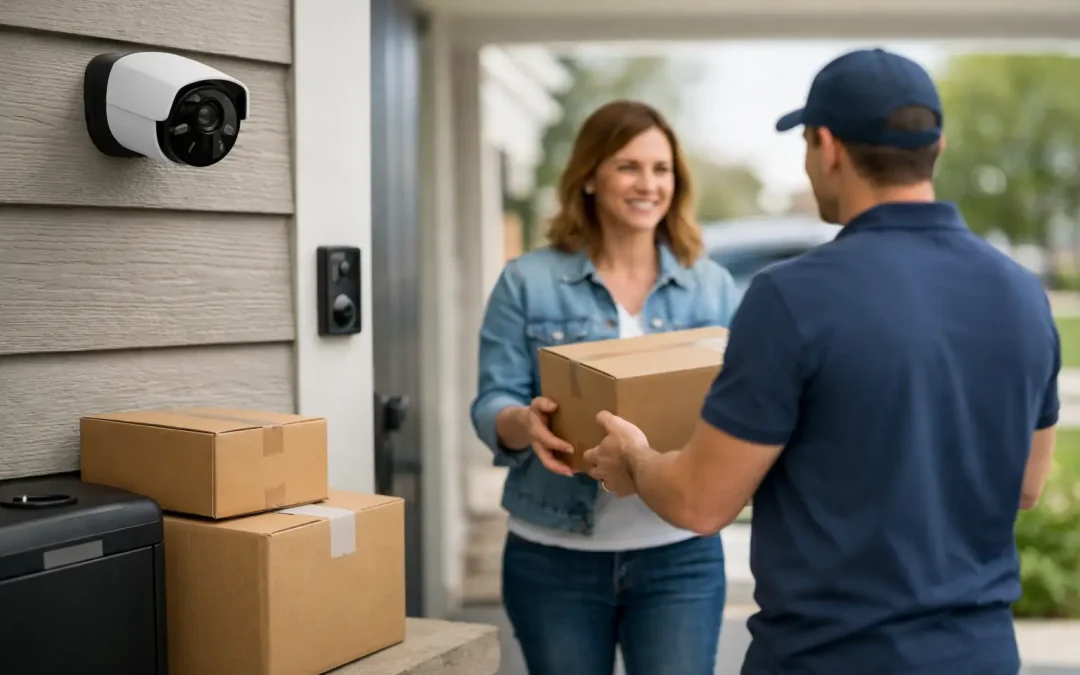
A delivery notification should be good news, not a countdown to whether the box will still be there when you get home. Effective package theft prevention is less about one expensive gadget and more about creating a delivery routine that matches your household, work schedule, and the type of items you receive.
For North Dallas residents and busy business owners, the best approach is usually layered: make packages harder to spot, shorten the time they sit outside, and choose a secure receiving option for orders that cannot be replaced easily. A few small changes can make a meaningful difference without turning every online order into a logistical project.
Why package theft happens so quickly
Most package theft is opportunistic. A box sitting in clear view near a front door is easy to notice from the street or sidewalk, and a thief does not need much time to make a decision. That means the goal is not necessarily to make your home look like a fortress. It is to remove the easy opportunity.
Long delivery windows create the biggest exposure. If a package arrives at 11 a.m. and no one gets home until after 6 p.m., it may be visible for hours. High-value-looking packaging, a predictable delivery pattern, and an unprotected entryway can add to the risk.
Businesses face a similar issue. A storefront, office suite, or home-based business may receive inventory, documents, samples, and customer returns throughout the day. When deliveries are left at an unattended door, the loss can interrupt more than one person’s schedule.
Package theft prevention starts before checkout
The easiest way to protect a package is to decide where it should go before it is shipped. When placing an order, review the retailer’s delivery choices instead of automatically accepting the default. Some sellers offer delivery instructions, signature options, pickup locations, or a choice of delivery date.
If an item is valuable, limited, temperature-sensitive, or difficult to replace, choose a delivery day when someone can receive it. A signature requirement can help in some cases, though it is not perfect. It may mean a missed delivery if nobody is available, so it works best when you know someone will be home or when the carrier offers a nearby pickup alternative.
Be careful with delivery notes. Instructions such as “leave behind side gate” may make a package less visible, but only if the location is genuinely secure and accessible to the driver. Avoid sharing gate codes or highly detailed property information in notes that may be viewed by multiple parties.
For recurring shipments, create a dependable plan rather than improvising each month. That might mean scheduling deliveries for a day you work from home, sending orders to a staffed workplace when permitted, or using a private mailbox that accepts packages on your behalf.
Make your entryway less inviting
A few practical changes around the front entrance can reduce visibility and improve your ability to respond quickly. The right combination depends on your property, neighborhood, building rules, and budget.
A doorbell camera or exterior camera can alert you when a package arrives and provide useful documentation if something goes missing. Place cameras where they capture the approach to the door and are not blocked by plants, seasonal decorations, or poor lighting. Cameras are a deterrent, but they do not physically secure a package, so they work best alongside another measure.
Good exterior lighting also matters. Motion-activated lights can make a pickup more noticeable after dark and make it easier for cameras to record a clear image. Keep shrubs and decorative items trimmed so they do not create convenient cover near the entry.
Consider whether a package box, lockable delivery container, or a screened porch suits your home. A lockable box can be useful for households that receive frequent small parcels, but check its capacity and how a driver will access it. It may not accommodate oversized shipments, and a container that is too complicated to use consistently will not solve the problem.
A discreet delivery location can help, too. A side door, a covered alcove, or a designated spot behind a fence may be safer than the main porch. The trade-off is reliability: drivers need to be able to find and safely reach the location without delaying the route.
Use tracking as a real-time tool
Tracking notifications are most useful when they lead to action. Turn on delivery alerts through the retailer or carrier whenever possible, then make a quick plan once the package is marked out for delivery. If you are nearby, you may be able to pick it up within minutes of arrival. If you are away, ask a trusted neighbor, household member, or local friend to bring it inside.
For apartment residents, this may mean coordinating with a building office or concierge when one is available. Do not assume a shared mailroom is secure simply because it is indoors. Ask how deliveries are logged, who has access, and what happens when a package is left after office hours.
It is also wise to review the delivery photo when one is provided. A photo can confirm whether the package was placed at the correct address and help you identify it quickly if it is tucked behind a planter or another item near the door.
Choose a secure receiving address when needed
A private mailbox is often the simplest long-term option for people who are rarely home, travel frequently, or receive items for a business. Instead of sending important packages to an exposed doorstep, you can use a professional street address where mail and eligible packages are received in a staffed location.
This approach is especially useful for home-based professionals who do not want client documents, samples, or business equipment sitting outside their residence. It also creates separation between personal and business deliveries while giving a business a more professional mailing address.
Before choosing any mailbox service, ask practical questions. Which carriers can deliver there? How are packages recorded and held? Are oversized shipments accepted? What identification is required for pickup? The best solution is one that fits the carriers and package sizes you use most often.
At Mr. Parcel of Dallas, private mailbox customers can use a professional Dallas street address and receive help from a local team that understands the realities of multi-carrier shipping. For many customers, that added human oversight is more useful than hoping a package remains unnoticed at home.
Build a neighbor plan that respects boundaries
Trusted neighbors can be one of the most effective package theft prevention resources on the block. A simple arrangement to bring in packages during workdays or vacations can dramatically reduce the time a box is left outside. Return the favor when you can, and keep expectations clear.
Do not ask neighbors to accept responsibility for every delivery without checking first. They may have their own schedules, mobility limitations, or security concerns. A quick text after a delivery alert is more considerate than an open-ended request.
Neighborhood awareness helps as well. If several homes are experiencing suspicious activity, share factual information with neighbors and report patterns through appropriate local channels. Avoid posting sensitive details publicly, such as when your home will be empty or exactly where you hide packages.
If a package is missing, move quickly
A missing package is frustrating, but the first few steps are usually straightforward. Check the delivery photo, look around all doors and gates, and ask household members or neighbors before assuming theft. Packages are sometimes left at a nearby address or in an unexpected location.
If it is still missing, contact the retailer and delivery carrier promptly. Save order details, tracking information, delivery alerts, photos, and any camera footage. If you believe theft occurred, a police report may be appropriate, particularly for a high-value item or a repeated pattern in your area.
Avoid confronting someone based only on a blurry video or a suspicion. Your safety matters more than recovering a box. Documentation and a timely report give you a better foundation for resolving the issue with the seller, carrier, insurer, or local authorities.
Match the solution to the package
Not every delivery needs the same level of protection. A low-cost household item may only require alerts and a quick pickup. A laptop, legal document, customer order, prescription, or fragile specialty item deserves a more controlled handoff.
The most dependable system is the one you will actually use. Start with notifications, reduce how long packages remain visible, and reserve a secure receiving address or pickup option for deliveries where the stakes are higher. A little planning before the delivery truck arrives gives you more control and a lot less worry when the notification appears.